
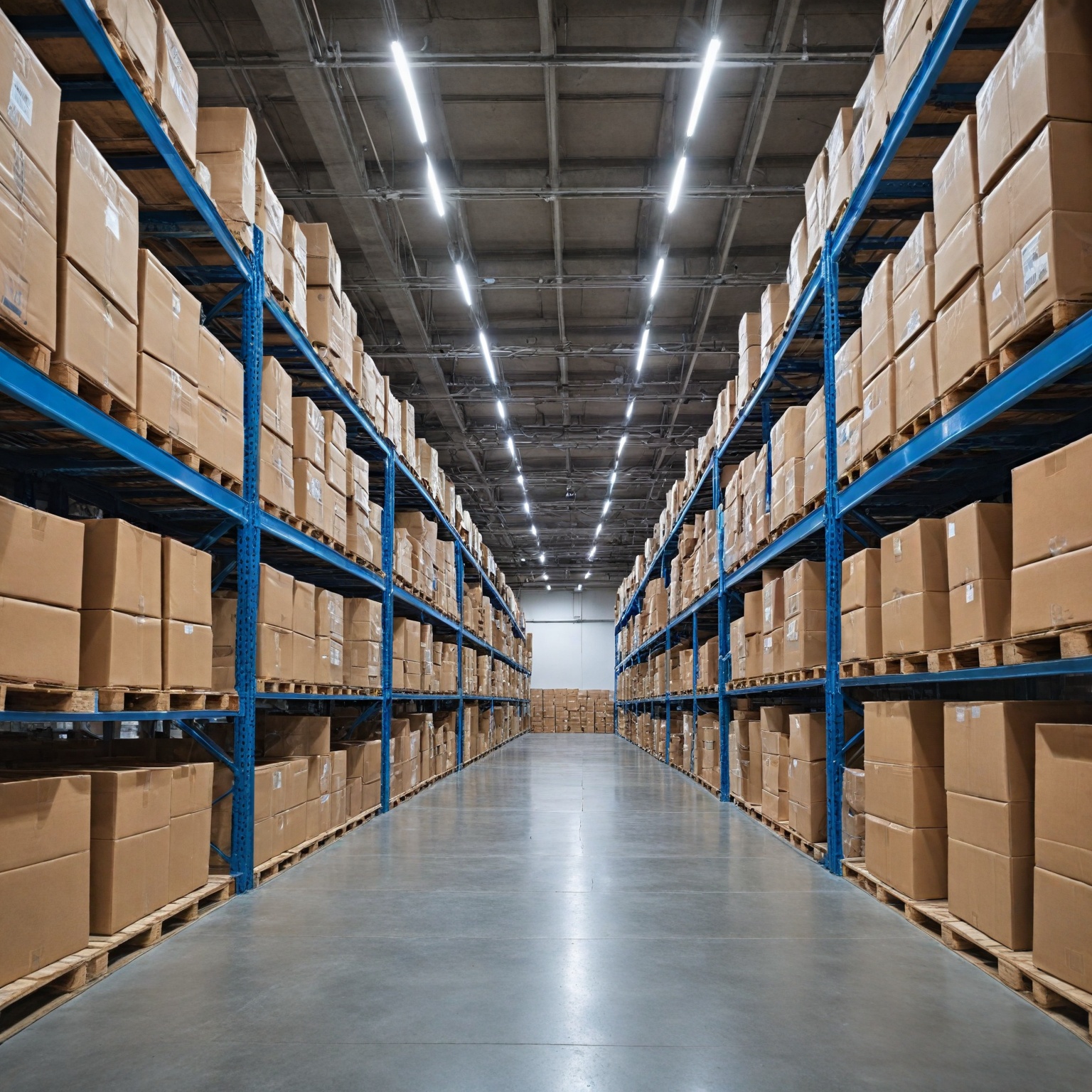
Warehouse Interview Questions: Amazon, FedEx, UPS, and Local DC Jobs in 2026
Warehouse interviews test for safety, stamina, and reliability. Here's the full question list with answers that get you hired and badged in.

Warehouse interviews are more straightforward than most. The manager isn’t digging for personality or testing your culture fit. They’re checking three things. Will you show up on time every shift. Can you lift 50 pounds over and over for 10 hours. Will you follow safety rules without needing to be reminded. If the answer to all three is yes, you’ll probably get hired inside a week.
What trips people up is the safety and scenario questions. A lot of candidates have never been asked to talk through a lockout-tagout procedure or what they’d do if a coworker loaded a pallet wrong. Those questions are the real filter in warehouse interviews because they separate people who’ve worked on a floor from people who haven’t. This guide walks through how to handle both.
We’ll cover Amazon’s structured behavioral questions, FedEx Ground’s package handler interview, UPS’s longer multi-step process, Walmart DC hiring, and the questions that come up at smaller third-party logistics (3PL) and distribution warehouses. Whether you’re applying to a Tier 1 at Amazon or a picker job at a cold-storage facility, the core questions are similar and the answers overlap.
The Four Warehouse Hiring Formats in 2026
Match your prep to the format. Here’s what to expect depending on where you apply.
Amazon. Online application, virtual job tryout (scenario questions and basic skills check), then a structured behavioral interview for most roles. Amazon’s behavioral questions lean on their Leadership Principles, so answers should hit themes like Customer Obsession, Bias for Action, and Ownership. For an Amazon associate role, the interview is 20 to 30 minutes and you’ll be asked 3 to 5 STAR questions.
UPS. Application, in-person interview with a supervisor, and a paid shadow shift. The process runs about a week from application to first paycheck. UPS also has a physical ability test that checks your lift-and-carry endurance.
FedEx Ground. Short interview with a station manager, an on-site tour, and a lift test. Shifts are part-time at many locations, so availability becomes the deciding factor fast. If you can work the early morning sort (3 to 8 a.m.) or the twilight sort (5 to 10 p.m.), you move to the top of the list.
Walmart DC and 3PL warehouses. One-on-one interview with a shift lead or operations manager, usually 30 minutes, followed by a walk-through of the floor. Many independent 3PLs hire through Aerotek, Adecco, or Onin Staffing first as a temp-to-hire, so your first interview may be with a recruiter rather than the warehouse itself.
Opening Questions (Almost Every Interview Has These)
Expect these five openers. Practice clean, specific answers.
”Tell me about yourself”
Keep it relevant to warehouse work. Four sentences. Who you are, physical work you’ve done before, why you want this role, your availability.
Example: “I’m 28, I live about 20 minutes from this facility. I worked construction for two summers and did a year at a Home Depot lumber yard, so I’m used to being on my feet and moving weight. I’m looking for a warehouse job because I want steady hours and I prefer indoor work in winter. I can do overnights or any shift, and I have my own transportation so I can be here on time every day.”
That answer tells the manager you’re local, physically prepared, and reliable. Three checkmarks in 40 seconds. The tell me about yourself guide covers the structure in more depth.
”Why do you want to work here?”
Don’t say “I need a job.” Find a specific reason connected to this employer.
Example for Amazon: “I know a guy who’s been at the BWI2 facility for three years. He said the team culture and the promotion path from Tier 1 to PA (process assistant) is real if you show up and put in work. That’s what I’m looking for. A job where I can actually move up in a couple years, not dead-end stuff.”
Example for UPS: “My uncle retired from UPS after 30 years as a package car driver. I grew up hearing about the pension, the benefits, and the union. I’m not starting at driver, I know that, but I want to put in the time at the warehouse to eventually get into driving.”
Specific reason beats generic praise every time.
”What’s your availability?”
Be honest and be specific. Warehouses need bodies on specific shifts (overnight, early morning sort, weekend). Saying “I’m flexible” without specifics signals you don’t know what you can actually work.
Example: “I can work any shift. Overnights are fine with me. I’d prefer Monday through Friday but I’m open to Tuesday through Saturday if that’s the opening. I can start as soon as you need me. I don’t have any scheduling conflicts for the next six months."
"How much can you lift?”
Answer with a real number, not a range. “I can consistently lift 50 pounds for a full shift” is better than “I’m strong, probably around 50 or 60.” If the role requires 75-pound lifts, say whether you can do that honestly. If you can’t, don’t fake it. The physical test will catch you and getting hurt in the first week is far worse than losing the offer.
”Have you worked in a warehouse before?”
If yes, name the company, the role, the shift length, and one specific skill you picked up. “Two years at a Target DC in Indianapolis running a reach truck on the receiving side. 10-hour shifts. I’ve got a current reach certification.”
If no, pivot to similar physical work. “I haven’t been in a warehouse specifically, but I spent two summers doing residential moving, so I know what 8 to 10 hours of lifting feels like. I also did a year at a lumber yard loading customer trucks. Same muscle groups, same stamina requirement.”
Safety and Scenario Questions
Every warehouse interview includes at least one of these. The safety answer is usually more important than the efficiency answer.
”You see a coworker lifting a heavy box the wrong way. What do you do?”
What they’re testing: whether you speak up when safety is at stake, without being confrontational.
Good answer: “I’d walk over and say something friendly, like hey, do you want a hand with that one, or let me grab the other side. That way I’m helping without making it a callout. If I saw the same person doing it repeatedly, I’d mention it to the shift lead, not to get them in trouble but because a back injury puts two people on light duty, them and whoever has to cover their shifts.”
Answer signals safety-first culture and peer awareness without sounding like a snitch.
”You notice a pallet is stacked unevenly and the top row looks like it could tip. What do you do?”
Good answer: “I’d stop and reset it. An unstable pallet in an aisle is a safety hazard, so I’d either restack it myself if I could reach or call for a forklift operator if it’s too high. I wouldn’t walk past it. I’d tell the shift lead about it too, because sometimes unstable pallets come off a bad staging process and you want to fix the upstream cause.”
Fix the immediate safety issue. Report it. Think about root cause. Three signals in one answer.
”Your scanner isn’t reading a barcode on an order. What do you do?”
Good answer: “I’d try a different angle first, because sometimes the barcode is scuffed or wrinkled. If it still didn’t read, I’d manually key in the SKU from the label or from the pick list. If neither worked, I’d flag my shift lead or the inventory team because it could mean the label got damaged during receiving or the SKU got entered wrong in the system. I wouldn’t let the order sit.”
The manager wants to hear that you’d solve the problem at your level first, escalate when you can’t, and keep the line moving.
”It’s the last hour of your shift and you’re still 20 units behind rate. What do you do?”
Good answer: “I’d try to push a little harder the last hour without cutting corners on safety or quality. If I knew I wasn’t going to hit rate no matter what, I’d ask a teammate if they had capacity to help or ask the shift lead whether to slow down and do it right or push. I’d rather be slightly under rate with clean work than hit rate with picks that get returned as errors.”
Rate matters. Accuracy matters more. Honesty matters most. Every warehouse manager wants to hear that order.
For the deeper pattern on answering behavioral and scenario questions, our behavioral interview questions guide covers the STAR method at length.
Amazon’s Leadership Principles Questions
If you’re interviewing at an Amazon Fulfillment Center, Sortation Center, or Delivery Station, expect at least one question aligned to their Leadership Principles. The most common ones for associate roles:
Customer Obsession. “Tell me about a time you went above and beyond for a customer or a coworker.” Any service-industry example works. Emphasize the specific customer or teammate, what you did, and how it turned out.
Ownership. “Tell me about a time you saw a problem and fixed it even though it wasn’t your job.” Any example where you stepped up without being asked. The key word is “without being asked.”
Bias for Action. “Tell me about a time you had to make a fast decision without all the information.” Any job where you had to act on incomplete info. Emphasize that the decision was reversible if it turned out wrong.
Deliver Results. “Tell me about a time you hit a tight deadline when things weren’t going smoothly.” Any example where you finished the job on time despite obstacles. Keep the answer under 90 seconds.
Three to five of these show up in the Amazon behavioral interview. Prep two stories per principle that you can flex into whatever question comes up. The tell me about yourself article covers the 90-second answer structure that works for most of these.
Questions You Should Ask Back
End every warehouse interview with two or three questions. Not having them is a red flag in any interview, warehouse or otherwise.
- “What does the first week of training look like for a new hire?”
- “What’s the shift length and what’s the typical overtime availability like?”
- “What’s the path from associate to shift lead or process assistant here?”
- “How does the team handle peak season, like holiday push in November and December?”
The questions to ask in an interview guide has more options. Pick two that feel natural for the role and keep them in mind for the close.
After the Interview
Send a thank-you within 24 hours if you have the interviewer’s contact info. Four sentences, nothing more.
“Thanks for the time this afternoon. I appreciated the walk-through and the conversation about the sort process. I’d love to join the team and can start as soon as the background check clears. Appreciate the consideration.”
If the manager said they’d call you within a week and they haven’t, follow up once. More than that and you come across as pushy.
Warehouse hiring is fast. A lot of offers happen the same day as the interview, with background checks completing in 48 to 72 hours. If you walked out of the interview with a start date, you’re already in. If you walked out with “we’ll call you,” follow up once and move on to the next application while you wait.
The warehouse interview isn’t designed to be tricky. It’s a read on whether you’ll show up, lift safely, and not get hurt. Answer questions specifically, show up in work-ready clothes, and talk about physical work you’ve done before. That’s the whole formula for getting badged in fast.
Frequently asked questions
How long does a warehouse interview last?▼
Most are short. Amazon, Walmart DC, and FedEx Ground often run 15 to 20 minute interviews. UPS has a slightly longer process with a 30 minute structured interview and a separate physical test. Smaller 3PL warehouses may do a 30 to 45 minute sit-down plus a walk-through of the floor.
Do warehouse jobs still do physical tests?▼
Yes for most. Amazon and UPS use a work simulation where you lift, carry, and move boxes in the 30 to 50 pound range for about 10 to 15 minutes. FedEx Ground uses a lift assessment around 75 pounds. Smaller warehouses often skip the formal test and watch how you move during a walk-through. You should be honest about any physical limitations up front.
What should I wear to a warehouse interview?▼
Clean jeans or work pants, a plain t-shirt or polo, and closed-toe shoes (steel-toe is a plus if you own them). Don't wear a suit. Don't wear open-toed shoes or sandals. Bring a valid ID for the onboarding packet, because many warehouses will offer you the job on the spot if you pass.
Related guides

Retail Interview Questions: What Store Managers Actually Ask in 2026
From the Target group interview to the Home Depot one-on-one, here's what retail hiring managers ask, and how to answer every question.

Food Service Interview Questions: Restaurant, Cafe, and Fast Food Interviews in 2026
Servers, cooks, and baristas all get asked the same questions. Here's the full list, with answers managers actually want to hear.
How to Answer 'Tell Me About Yourself' (With 5 Real Examples)
The interview opener trips up most candidates. Here's a 60-second framework that works across industries and seniority levels.

50 Behavioral Interview Questions (and How to Answer Every Category)
Behavioral interview questions follow predictable patterns. Here's the 50 that come up most often, grouped by what interviewers are really testing.